

Mark 10:25 — “It is easier for a camel to go through the eye of a needle than for a rich man to enter the kingdom of God.”
Few sayings of Jesus are quoted more often—and explained away more quickly—than His words about the camel and the needle. An entire cottage industry of interpretations has arisen to soften the blow: a supposed narrow gate in Jerusalem, a camel stooping awkwardly, a lesson about inconvenience rather than impossibility. This assertion is not only unsupported by history; it empties the saying of its force. Jesus was not illustrating a common annoyance. He was declaring a sobering truth.
Not a Gate, Not a Metaphor of Mild Difficulty
There is no credible evidence that Jesus was referring to a small gate called “the Needle’s Eye” through which camels passed with difficulty. Even if such a gate had existed, it would miss the point entirely. Why would the Lord of glory warn His disciples about the kingdom of God by pointing to a familiar, solvable inconvenience? Why would astonishment seize the disciples (Mark 10:26) if Jesus merely meant that wealth makes things harder?
Jesus did not say it is hard for the rich to enter the kingdom. He said it is impossible—as impossible as a camel passing through the eye of a sewing needle. The shock of His statement lies precisely there.
Literal Words, Rightly Understood
Jesus means what He says. A camel is a camel. A needle is a needle. The image is not hyperbole meant to be deflated; it is literal language meant to be feared—and then understood rightly.
Can a camel pass through the eye of a needle? Certainly.
Not as it is.
Not intact.
Not alive to what it once was.
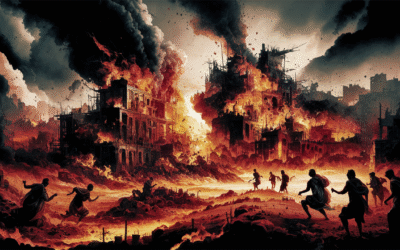
In the ancient world, without modern or theoretical equipment, it could still be done. Burn the camel to ash, or reduce it entirely to liquid. Then drag the eye of the needle through what remains, and the camel will have passed through.
Absurd? Only if you are thinking like a rich man.
Thinking Like Jesus
Jesus is not impressed by wealth. He does not create wealth. He creates life.
When riches encumber a person’s path to the kingdom, the Lord will not negotiate with them. He will not trim them, manage them, or gently reposition them. He will destroy them. Completely. Without apology.
This is not magic. It is not exaggeration. It is practical application.
What cannot pass through must die.
The Necessity of Death
The teaching is consistent with everything else Jesus says about entering the kingdom:
“Whoever loses his life for My sake will find it.”
“Unless a grain of wheat falls into the earth and dies, it remains alone.”
“If anyone would come after Me, let him deny himself.”
The rich ruler walked away sorrowful because he would not let his wealth die (Mark 10:22). The camel would not become ash.
But Jesus does not abandon the camel. He burns it.
Let Your Wealth Die With You
If you are wealthy, understand this clearly: your wealth must die with you. It cannot enter the kingdom. It cannot be carried through. It must be reduced to nothing.
So let it die.
Pass through the eye of the needle as ashes—ashes of pride, ashes of self-sufficiency, ashes of the life you thought had value. What emerges on the other side is not loss, but rebirth. Mercy. Grace. Life.
Only then will you finally possess something that cannot be taken from you.
“With God All Things Are Possible”
When the disciples recoiled in fear, Jesus did not correct His image. He deepened it:
“With man it is impossible, but not with God.” (Mark 10:27)
God does not squeeze camels through needles. He destroys them to the world and resurrects them in the kingdom.